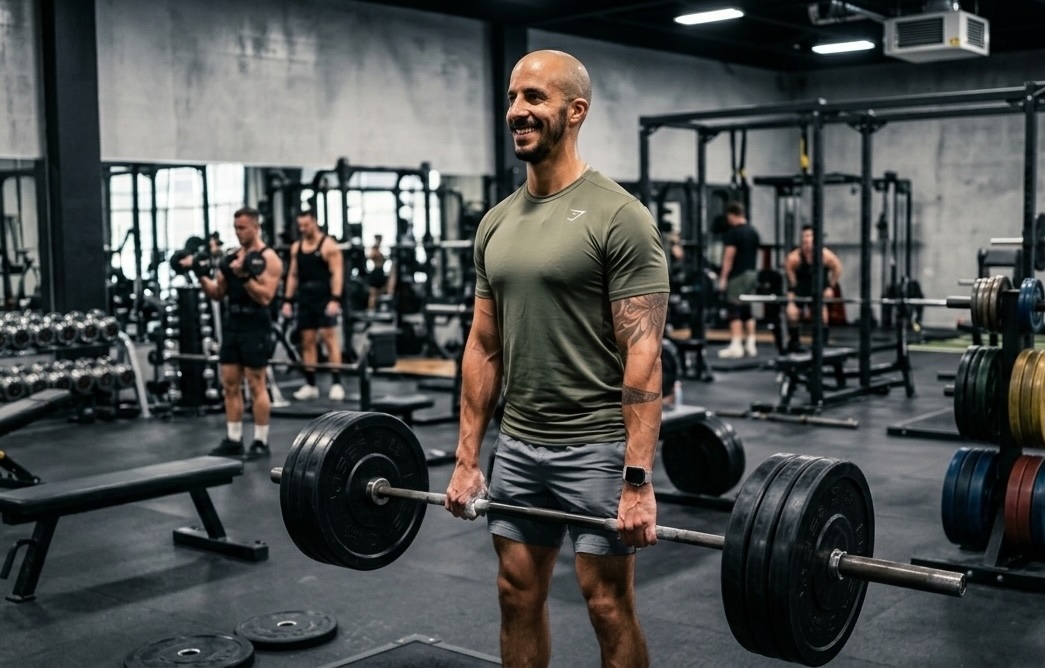
Does Heavy Lifting Actually Build More Strength Than Lighter Loads?
By Adi · August 26, 2026
Yes—maximum strength gains are maximized by the heaviest loads, while power and jump performance prefer lighter-to-moderate loads.
The Core Finding
Yes—maximum strength gains are maximized by the heaviest loads, while power and jump performance prefer lighter-to-moderate loads. A comprehensive 2024 Bayesian meta-analysis of 295 studies (over 6,700 participants) showed that training intensity of load is the dominant driver of adaptations, and the optimal intensity shifts dramatically depending on the goal. Heaviest loads (≥80% 1RM) produce the biggest strength increases; vertical jump peaks around ~30% 1RM; power is best with 40–70% 1RM. Hypertrophy and other outcomes respond differently, confirming that “lift heavy for everything” is outdated coaching.
🏋️♂️ Key Takeaways
Prioritize: Match load to the outcome—go heaviest for pure strength, drop the load for power or explosiveness.
Program: Keep volume and effort high across the board; intensity is the variable that differentiates results.
Periodize: Cycle heavy strength blocks with lighter power/jump work instead of using the same heavy loads year-round.
Track: Log %1RM or RPE by exercise and goal so you can deliberately shift intensity when priorities change.
⚠️ The Catch (Study Weaknesses)
The analysis focused on interventions ≤26 weeks and relied on average group-level data rather than individual response tracking. Many included studies used recreationally trained or mixed populations, so elite athletes or very advanced lifters may show different dose-response curves. Direct hypertrophy measures were not the primary focus of every outcome domain modeled.
📲 The Adi.fit Application
Busy professionals and parents don’t need complicated periodization spreadsheets. In Adi.fit, simply tag your main lifts by goal (Strength / Power / Hypertrophy) and log the actual load or estimated %1RM. The app’s workout tracker and progressive overload tools let you keep weekly volume consistent while deliberately shifting intensity—heavy for strength days, lighter and faster for power work—without guessing. Review your logged sessions weekly and adjust the next block accordingly.
Scientific Reference: Dose–Response Modelling of Resistance Exercise Across Outcome Domains in Strength and Conditioning: A Meta-analysis. Swinton PA, Schoenfeld BJ, Murphy A. 2024. PMID: 38652410 (DOI: 10.1007/s40279-024-02006-3).